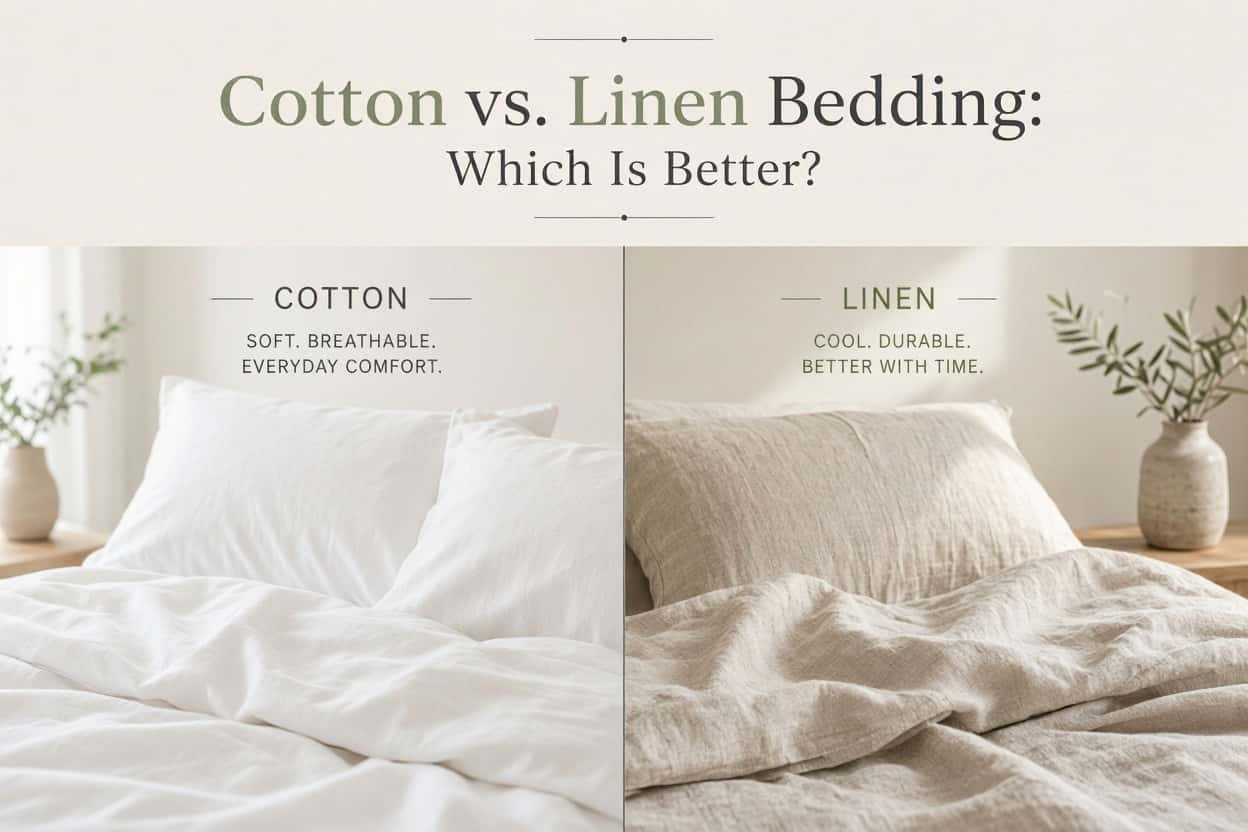
Choosing between cotton and linen bedding can be surprisingly difficult. Both are popular natural fabrics, both are available in a wide range of styles, and both can provide comfortable sleeping conditions. However, they feel quite different in everyday use.
Cotton is often associated with softness, easy maintenance, and versatility, while linen is valued for its distinctive texture, breathability, and relaxed appearance. Neither fabric is automatically better. The right choice depends on your climate, personal preferences, washing habits, and the type of bedding you need.
📊 At a Glance: The Core Differences
| Feature | Cotton (The All-Rounder) | Linen (The Breathable Luxe) |
|---|---|---|
| Source | Cotton plant | Flax plant |
| Feel (New) | Soft, smooth, plush right out of the box | Crisp, slightly coarse/textured |
| Feel (Aged) | Can wear out or pill over time | Softens significantly with every wash |
| Breathability | Good, but retains moisture longer | Excellent; wicks moisture rapidly |
| Aesthetic | Smooth, crisp, tailored | Relaxed, naturally wrinkled, rustic |
| Price | Budget-friendly to high-end | Generally a premium investment |
How Cotton and Linen Are Made
Cotton fabric is produced from the natural fibers surrounding cotton plant seeds. These fibers are spun into yarn and woven or knitted into different fabrics. The final result can vary considerably depending on fiber quality, yarn construction, and finishing methods.
Cotton bedding is available in several common constructions, including percale and sateen. Percale usually has a crisp, matte finish, while sateen tends to feel smoother and have a slight sheen. Both are made from cotton yarns, but their weaving structures create different surface characteristics.
Linen is made from fibers extracted from the flax plant. These fibers are generally longer and thicker than many conventional cotton fibers, giving linen its recognizable texture.
Linen fabric often has a slightly irregular surface, which is part of its natural appearance. It may feel somewhat firm when new but usually becomes softer with repeated washing and use.
Breathability and Temperature Comfort
One of the main reasons people choose linen is its ability to support comfortable airflow.
Linen is often a good option for warm bedrooms because its relatively open fabric structure allows air to circulate. It also absorbs moisture and releases it relatively quickly, which can help bedding feel less clammy.
Cotton is also breathable, although its performance depends on the fabric construction and weight. Lightweight cotton percale, for example, can feel cool and crisp, while heavier cotton flannel provides a warmer sensation.
It is worth remembering that fabric alone does not determine sleeping temperature. Mattress protectors, duvet fillings, bedroom ventilation, humidity, and personal sleep preferences all matter.
For people who tend to feel warm at night, lightweight linen or cotton percale may be worth considering. Those who prefer a smoother, warmer surface may find cotton sateen more appealing.
Softness and Texture
Cotton bedding is available in a wide range of textures. Some varieties feel smooth and silky, while others have a crisp, almost hotel-like finish.
The quality of cotton depends on several factors, including fiber length, yarn quality, fabric construction, and finishing. A higher price does not automatically mean that the bedding will feel better for everyone.
Linen has a more distinctive texture. New linen sheets can feel slightly coarse compared with soft cotton, although this varies by product. With use and appropriate washing, many linen fabrics become more comfortable.
If you enjoy a relaxed, naturally textured bed, linen may suit your preferences. If you prefer a consistently smooth surface, cotton is often the easier choice.
Durability and Everyday Use
Both cotton and linen can last for many years when properly made and cared for.
Linen fibers are generally strong, and good-quality linen bedding can withstand regular use. However, poor-quality stitching, excessive washing temperatures, and harsh detergents can still shorten its lifespan.
Cotton durability varies considerably. Strong cotton fabrics can be highly practical for everyday bedding, while lightweight or loosely woven versions may show wear more quickly.
When comparing products, look beyond the fiber name. Check the fabric weight, construction, stitching, care instructions, and whether the manufacturer provides clear information about the material.
A well-made cotton sheet can be a better purchase than poorly constructed linen, even if linen is often marketed as a premium fabric.
Wrinkling and Appearance
Wrinkling is one of the most noticeable differences between these materials.
Cotton can wrinkle, especially when it is removed from the washing machine and left damp in a pile. Some cotton finishes are designed to reduce wrinkles, but they may involve additional processing.
Linen wrinkles more visibly. Its natural creases are part of the fabric’s characteristic appearance, and many people consider them attractive.
If you prefer a neatly pressed bed, cotton may require less effort. If you enjoy a relaxed bedroom style, linen wrinkles are unlikely to be a problem.
Washing and Maintenance
Cotton bedding is generally straightforward to maintain. Most cotton sheets can be machine-washed, although the recommended temperature depends on the fabric, dye, and manufacturer’s instructions.
Linen also washes well when handled appropriately, but aggressive treatment should be avoided. Excessive heat, harsh bleaching products, and rough drying can weaken fibers or affect the appearance.
For both materials, avoid overloading the washing machine. Bedding needs sufficient space to move during washing and rinsing.
Drying naturally can help reduce unnecessary heat exposure. If using a dryer, follow the care label and avoid excessive drying, which can contribute to shrinkage and stiffness.
Which Fabric Is Better for Different Households?
Cotton is a practical choice for households that prioritize easy maintenance, a familiar texture, and a wide range of prices. It is also suitable for guest bedrooms because many people are already comfortable with its feel.
Linen may be particularly appealing to people who enjoy natural materials, relaxed styling, and breathable bedding. It can also suit bedrooms with a simple, understated interior design.
For families with children or frequent bedding changes, washable cotton may be more convenient. For someone furnishing a personal bedroom and willing to invest in a different texture, linen could be worth exploring.
How to Make the Final Decision
There is no universal winner between cotton and linen. The most useful approach is to consider how the bedding will be used.
If possible, feel fabric samples before purchasing. Compare lightweight cotton percale with linen rather than comparing unrelated products simply because both carry the same fiber label.
Pay attention to the mattress size, fitted-sheet depth, fabric construction, and washing instructions. These details often have a greater impact on satisfaction than marketing terms.
Ultimately, cotton offers versatility and familiar comfort, while linen provides a distinctive texture and a relaxed, breathable feel. Choosing the right one is less about following a trend and more about finding bedding that suits your everyday sleeping habits.