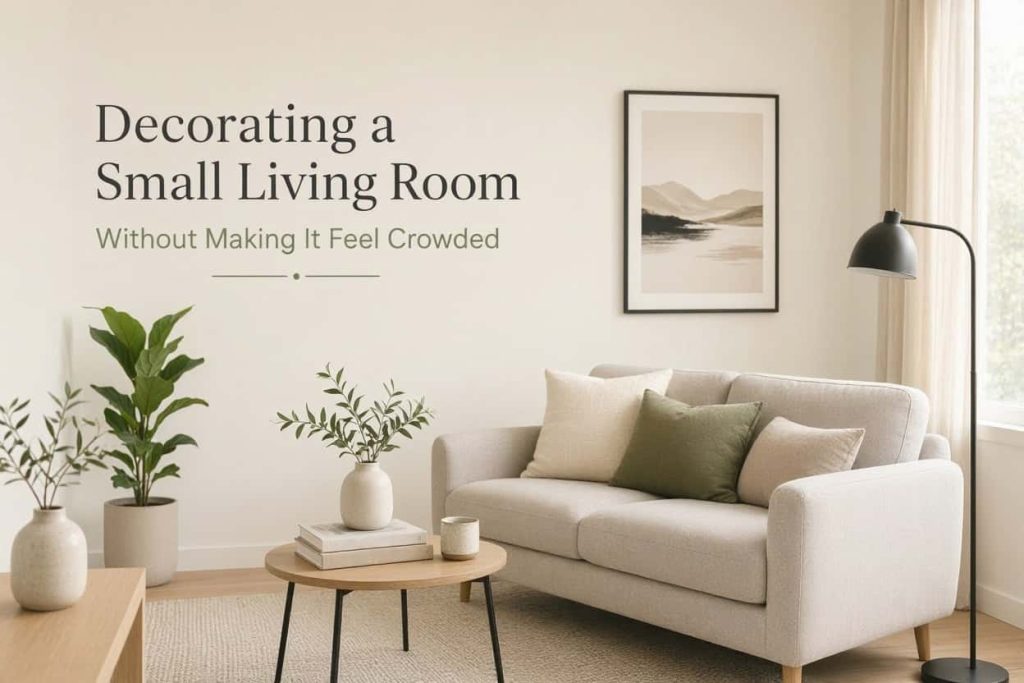
A small living room can be comfortable, attractive, and practical, but decorating one requires a little more planning than working with a large open space. Every piece of furniture occupies a meaningful amount of floor area, and even a few unnecessary accessories can make the room feel crowded.
The common solution is to buy smaller furniture and remove as many decorations as possible. While this can help, it does not address every problem. A room may still feel awkward if the furniture is poorly arranged, the storage is inadequate, or the lighting creates dark corners.
The goal should be to make the available space work efficiently while preserving enough personality to make the room feel like home.
Choose Furniture Based on the Room’s Proportions
Large furniture is not automatically unsuitable for small rooms. In fact, one properly sized sofa can sometimes work better than several small chairs and tables.
The important consideration is proportion.
Measure the room before purchasing furniture, including the width of doorways and the available walking space. A sofa that fits on paper may still be difficult to move into the room.
Look at the sofa’s overall depth, armrest width, and back height. A deep sofa with bulky arms can occupy considerably more space than a similarly wide design with a simpler frame.
Furniture with visible legs can create a sense of openness because more of the floor remains visible. This does not mean every piece needs to be raised off the ground, but using a few visually lighter items can help balance the room.
Avoid buying furniture solely because it is advertised as suitable for small spaces. Actual measurements and the way the item will be used matter much more than marketing descriptions.
Keep Walking Paths Clear
A small living room becomes frustrating when people have to move around furniture constantly.
Start by identifying the main route between doors, windows, and frequently used areas. This route should remain as clear as possible.
The coffee table is often a source of unnecessary obstruction. If the space between the sofa and table feels tight, consider a smaller design or a pair of nesting tables.
Side tables can sometimes replace a larger central table. A narrow table beside the sofa may provide enough space for drinks, books, and a lamp.
Do not push every piece of furniture against the walls automatically. This arrangement can create an empty center while leaving the edges crowded. A better layout depends on the room’s shape and the location of doors and windows.
Use Multi-Functional Furniture
In compact living rooms, furniture that serves more than one purpose can reduce the total number of items required.
A storage ottoman can provide extra seating, a place to rest your feet, and concealed storage for blankets or magazines.
A coffee table with shelves or drawers can hold remote controls and small accessories. A slim console table may provide storage without taking up as much depth as a conventional cabinet.
If the living room also functions as a guest space, a suitable sofa bed may be useful. However, consider the opening mechanism and the space required when it is fully extended.
Multi-functional furniture is only worthwhile when its different uses are genuinely practical. A complicated item that is difficult to open or uncomfortable to sit on may create more problems than it solves.
Make Better Use of Vertical Space
When floor area is limited, walls provide valuable storage and decorating opportunities.
Floating shelves can hold books, framed photographs, and small decorative objects without occupying floor space. Wall-mounted cabinets can provide concealed storage, while hooks can be useful near entry points.
However, vertical storage should not turn every wall into a display area.
Too many shelves, especially when filled with small objects, can make a room feel visually busy. Choose a few useful locations and leave some wall space empty.
Tall furniture can also draw the eye upward, making the room feel more vertically balanced. A narrow bookcase may be more practical than a wide, low cabinet, provided it does not obstruct windows or create safety concerns.
Secure tall furniture properly, especially in homes with children or pets.
Use Mirrors and Lighting Strategically
Mirrors can help a small room feel more open by reflecting light and creating a sense of additional depth.
A large mirror positioned opposite a window may distribute natural light more effectively. However, be mindful of what the mirror reflects. Reflecting a cluttered storage area may simply make the clutter more noticeable.
Lighting should be distributed across the room rather than concentrated in one place.
A ceiling fixture provides general illumination, while a floor lamp or wall light can brighten a darker corner. Table lamps may work well on narrow side tables.
Avoid relying entirely on very bright overhead lighting. Layered lighting creates a more comfortable atmosphere and helps the room feel less flat.
Select Rugs and Curtains Carefully
Textiles have a significant influence on how a small living room looks and feels.
A rug that is too small can visually divide the seating area into disconnected pieces. Choosing a rug large enough to relate to the main furniture group can make the room feel more cohesive.
Light-colored rugs may help maintain an open appearance, but darker or patterned options can work too. The important factors are proportion and how the rug relates to the other furnishings.
Curtains should also be considered in relation to the windows and walls. Hanging a curtain rod slightly above the window frame can draw the eye upward, while extending it beyond the window width allows more daylight into the room when the curtains are open.
Lightweight fabrics often work well in compact spaces because they do not create a heavy visual barrier.
Be Selective With Color and Patterns
Using too many unrelated colors can make a small room feel visually fragmented.
A limited palette provides a sense of continuity. For example, warm white walls, a beige sofa, natural wood furniture, and a few olive-green accessories can create a balanced appearance.
This does not mean avoiding strong colors entirely. A single colorful artwork or a patterned cushion can provide personality without overwhelming the space.
If you prefer patterned wallpaper or upholstery, consider using it on one main feature rather than introducing several competing patterns.
Give Everything a Practical Storage Place
Small rooms become messy quickly because there is little spare space for everyday belongings.
Create a storage routine for frequently used objects. Blankets can go into an ottoman, magazines can be placed on a shelf, and remote controls can stay in a small tray.
Closed storage is particularly useful for items that are not attractive enough to display. It helps maintain a cleaner appearance without requiring you to hide everything before guests arrive.
Try to avoid using the living room as a temporary storage area for objects that belong elsewhere. Regularly returning these items to their proper places makes a noticeable difference.
Resist the Urge to Fill Every Empty Corner
One of the most common decorating mistakes in a small room is treating every empty area as an opportunity to add furniture.
An empty corner can provide visual breathing room. It can also make the room easier to move through and clean.
Before adding another chair, shelf, or decorative table, ask whether it serves a useful purpose.
A successful small living room does not need to contain every item that a larger room might have. It needs comfortable seating, practical lighting, sufficient storage, and enough open space for people to use it naturally.
When these elements work together, even a compact living room can feel welcoming rather than restricted.