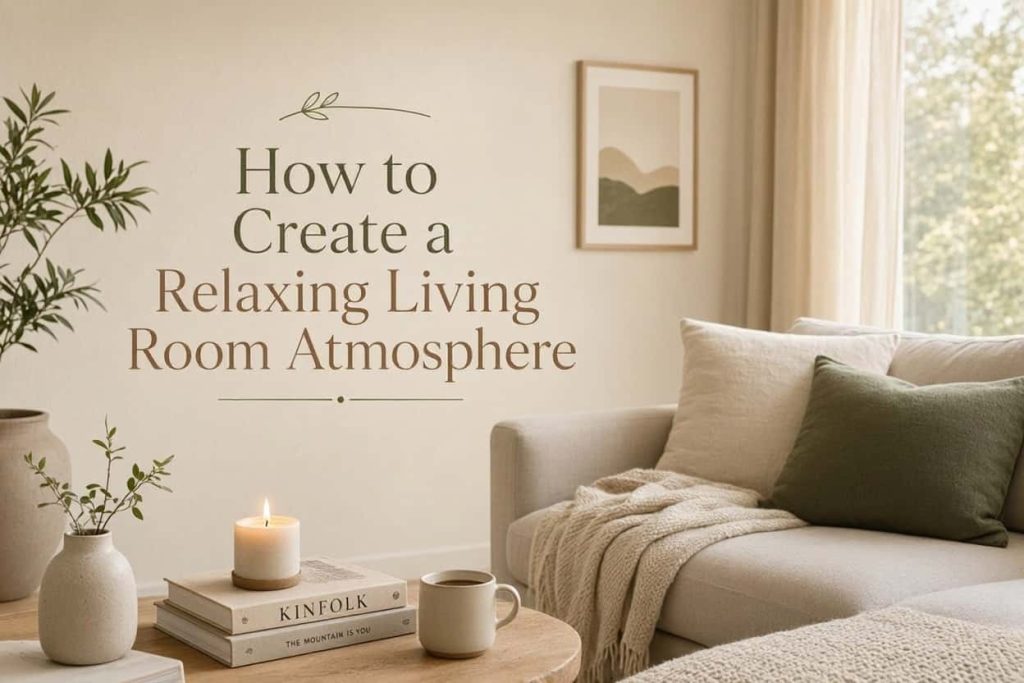
The living room often serves several purposes throughout the day. It may be a place for watching television, reading, talking with family, entertaining guests, or simply sitting down after work. Because it has to accommodate different activities, creating a genuinely relaxing atmosphere can be more complicated than choosing attractive furniture.
A room may look beautifully decorated but still feel uncomfortable because of harsh lighting, awkward furniture placement, excessive noise, or too many competing visual elements.
The goal is to make the space support the way you actually want to spend time in it.
Think About How You Use the Room
Before changing furniture or purchasing decorations, consider the activities that take place in your living room.
If family members frequently watch television together, comfortable seating and suitable viewing angles should be priorities. If you prefer reading, a quiet corner with a supportive chair and a nearby lamp may be more useful than additional decorative furniture.
Some households need a flexible arrangement because the living room also functions as a workspace or children’s play area. In these situations, movable storage and furniture that serves more than one purpose can help keep the room manageable.
It is helpful to identify the main activity and one or two secondary uses. This gives the room a clear purpose without making it feel restricted.
Arrange Seating to Encourage Relaxation
Furniture placement has a noticeable effect on how comfortable a living room feels.
A sofa positioned directly against a wall is a common arrangement, particularly in smaller homes. However, it is not always the most practical option. If space permits, moving the sofa slightly away from the wall can create a more balanced layout.
Try to arrange seating so that people can communicate without having to turn awkwardly. Chairs can face the sofa at a slight angle, creating a natural conversation area.
A coffee table should be accessible from the main seats but should not interrupt walking paths. If a conventional coffee table takes up too much room, consider a smaller side table or a nesting table arrangement.
Pay attention to seat depth and height as well. Deep sofas may feel comfortable to some people but can be difficult for others to use without additional cushions. The best furniture is the furniture that suits the people living in the home.
Use Layered Lighting Instead of One Bright Source
Lighting can completely change the mood of a living room.
A single overhead fixture often provides sufficient general illumination, but it may not create the atmosphere people want during quiet evenings. Adding lamps allows different parts of the room to be illuminated independently.
A floor lamp beside the sofa works well for reading. A table lamp on a sideboard can provide gentle background light, while adjustable wall lights can illuminate specific areas without taking up floor space.
Warm-white lighting is often preferred for relaxing environments. A color temperature around 2700K to 3000K generally produces a warm appearance, although personal preference and the room’s existing colors should influence the final choice.
Avoid placing uncovered bulbs directly within the normal line of sight, as glare can make even attractive lighting uncomfortable.
Introduce Comfortable Fabrics
Soft furnishings help a living room feel less formal.
A rug can define the seating area and make the floor more comfortable underfoot. Ideally, it should be large enough to relate visually to the main furniture rather than appearing like a small mat floating in the middle of the room.
Cushions provide additional support and allow you to introduce different textures. For everyday use, removable covers are particularly practical because they can be cleaned more easily than permanently upholstered accessories.
A throw blanket placed over one end of the sofa is another useful addition. It can be used on cooler evenings and adds a relaxed appearance without requiring extensive decoration.
Choose fabrics according to household needs. Families with pets or young children may prefer tightly woven materials and washable covers, while a household with less frequent use may have more flexibility.
Control Noise and Unwanted Distractions
A relaxing living room should not feel unnecessarily noisy.
Hard flooring, large windows, glass tables, and bare walls can contribute to echo. Rugs, curtains, upholstered furniture, and fabric accessories absorb some sound and help reduce the impression of an empty space.
If outside traffic or neighborhood noise is a problem, heavier curtains may provide some improvement, although they should not be expected to replace proper window insulation.
Electronic distractions also deserve consideration. Multiple devices, visible cables, and constantly flashing screens can make a room feel busier than necessary.
Create a practical place for remote controls, charging accessories, and small electronics. This keeps frequently used items accessible without allowing them to dominate the room.
Choose a Calm but Interesting Color Palette
A relaxing living room does not need to be completely neutral. What matters is how the colors interact.
Warm whites, soft beige, muted green, and earthy brown are popular because they create a gentle background. However, darker colors can work well when balanced with suitable lighting and lighter furnishings.
If the room already contains a colorful sofa or patterned rug, use these existing features as the starting point for the rest of the palette.
A useful approach is to select one dominant color, one supporting shade, and a smaller accent color. Repeating these shades in cushions, artwork, curtains, or decorative objects helps the room feel connected.
Avoid introducing too many unrelated patterns. A patterned rug can be balanced with simpler cushions, while a plain sofa can accommodate more expressive accessories.
Keep Everyday Items Within Reach
Relaxation becomes difficult when ordinary activities involve constantly searching for things.
A small side table can hold a drink, book, or reading glasses. A basket near the sofa can store blankets, while a closed cabinet can conceal gaming accessories, chargers, and other miscellaneous items.
The key is to make frequently used objects convenient without leaving everything on display.
Do not aim for a perfectly empty room. A living room should accommodate real life, including books, hobbies, and personal belongings. The objective is to give those objects a sensible place.
Add Personal Details Without Overdecorating
Personal objects help a living room feel like a home rather than a showroom.
Family photographs, travel souvenirs, handmade decorations, and favorite books can all contribute to a welcoming atmosphere. However, displaying everything at once may create visual clutter.
Choose a few items that have personal meaning and arrange them with enough space around each object. Rotating decorations occasionally can also keep the room interesting without requiring new purchases.
Plants, natural wood, and stone accessories provide additional texture without making the space feel overly decorative.
Make the Room Comfortable at Different Times of Day
A well-designed living room should work in the morning, afternoon, and evening.
During the day, natural light and clear window areas help create an open environment. In the evening, smaller lamps and softer lighting can make the same space feel more intimate.
Temperature control, ventilation, and window coverings also contribute to comfort. A room that receives strong afternoon sunlight may need blinds or curtains to prevent excessive heat.
Creating a relaxing living room is ultimately a process of removing small sources of discomfort. Thoughtful furniture placement, suitable lighting, comfortable materials, and manageable storage can transform an ordinary space into one that people naturally enjoy spending time in.